How to Increase Your VA Disability Rating
Most veterans who receive a VA disability rating accept it and move on. That is understandable. The claims process is exhausting. Getting a decision feels like crossing a finish line.
But the finish line is rarely where veterans think it is.
The VA only rates what is in the record. If your C&P examiner missed a condition, if secondary conditions were never filed, if your rating decision misapplied the criteria, the result is a rating that does not reflect your actual disability. And every month you spend at the wrong rating is a month of undercompensation you cannot fully recover.
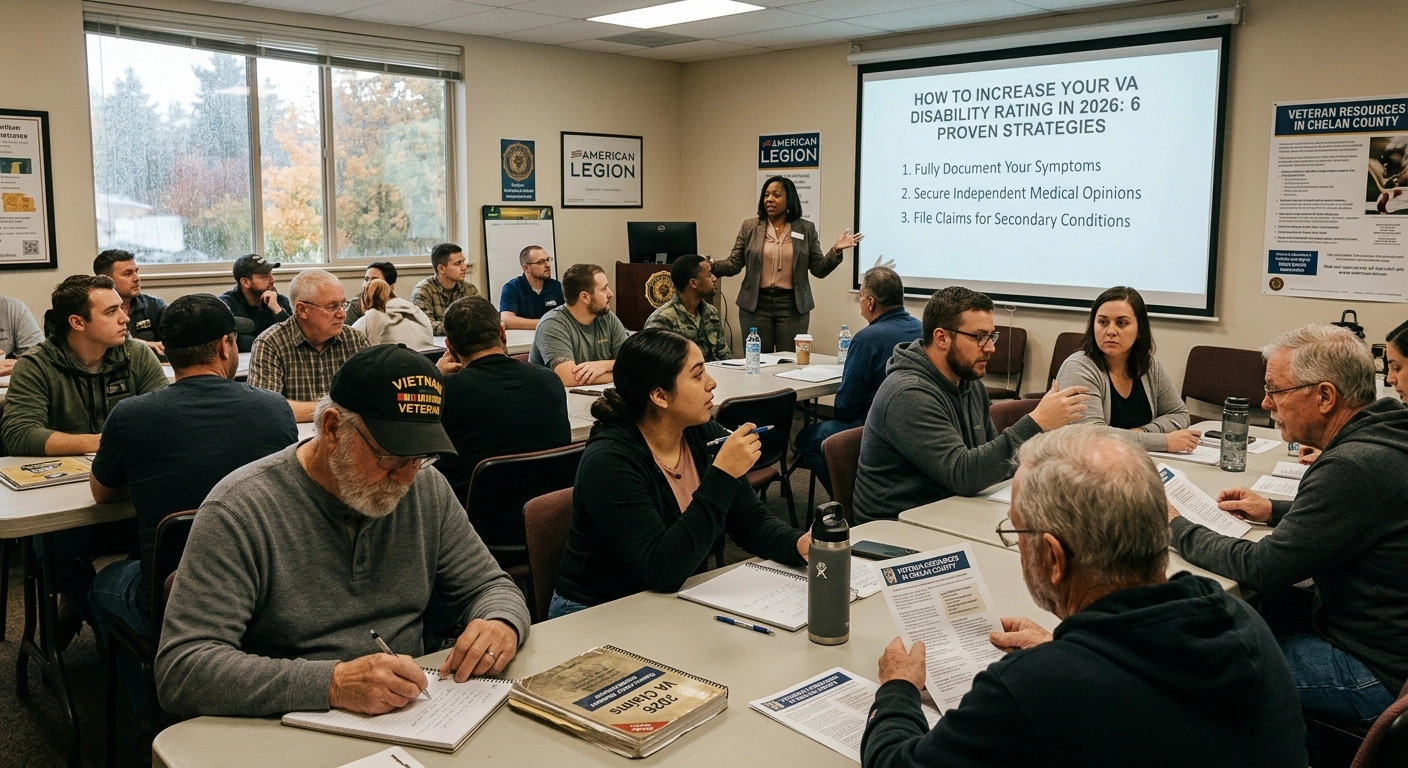
Here are six concrete strategies to increase your VA disability rating in 2026.
Strategy 1: File for Every Secondary Condition
Secondary service connection under 38 CFR 3.310 allows the VA to rate conditions that were caused or worsened by your already service-connected disabilities. You do not need to prove a new connection to military service. You only need a physician's nexus opinion connecting the new condition to the existing primary condition.
This is the single highest-value strategy for most veterans with established ratings.
Common secondary chains that produce significant rating increases:
PTSD causes or aggravates sleep apnea (50%), hypertension (10-60%), migraines (0-50%), and GERD (10-60%).
Lumbar spine conditions cause or aggravate lumbar radiculopathy (10-80% per leg) and hip conditions (10-40%).
Knee conditions cause or aggravate contralateral knee conditions, hip conditions, and ankle conditions.
Tinnitus causes or aggravates sleep disorders and anxiety.
If you have service-connected conditions and have never filed secondary claims, this is the place to start. Get treatment records documenting the secondary condition and a nexus letter from a treating physician. File the secondary claim.
Strategy 2: Request a Higher-Level Review If Your Rating Is Recent
If you received a rating decision within the past year and believe the rating is incorrect, a higher-level review puts a senior VA rater on your file. The senior rater reviews the existing record looking for errors in how the criteria were applied.
Higher-level reviews are free. They do not require new evidence. And if the senior rater identifies an error, the rating can be corrected with back pay to your original effective date.
Common errors a higher-level review catches: wrong diagnostic code applied, bilateral factor not applied, multiple codes for the same condition not applied, pain during motion not documented as functional loss.
Strategy 3: File a Supplemental Claim With New Evidence
A supplemental claim allows you to add new and relevant evidence to a previously decided claim. The VA is required to review the claim with fresh consideration when new evidence is submitted.
New evidence that commonly supports increased ratings includes:
Private nexus letters from treating physicians. A strong nexus letter from a physician who has treated you for years is often more specific and more persuasive than the C&P examiner's report.
Buddy statements. Written statements from family members, coworkers, or former supervisors who observed how your condition affects your daily function. These statements are evidence the VA must consider.
Independent Medical Opinions. A private IMO from a physician who reviews your complete file and provides a well-reasoned opinion on diagnosis, nexus, and severity is one of the most powerful tools in the claims system.
New diagnostic testing. A range of motion study that captures your worst-day function, an updated sleep study, or audiometric testing can produce measurements that support a higher rating.
Strategy 4: Document Flare-Ups and Worst-Day Function
The VA is required to consider the functional impairment consistent with flare-ups of a condition, not just the function observed at a single C&P exam.
This matters most for musculoskeletal conditions. If your back is manageable on most days but leaves you bedridden twice a month, the examiner who sees you on a good day records a flexion measurement that understates your disability. A physician's statement documenting the nature, frequency, and functional impact of flare-ups can support a higher rating even without a new C&P exam.
Keep a symptom journal. Note the dates and duration of flare-up events, what you cannot do during a flare-up, and any physician visits associated with it. This record is evidence.
Strategy 5: Verify the Bilateral Factor Was Applied
If you have service-connected conditions on both sides of a paired extremity and the bilateral factor was not applied in your rating decision, you have a clear basis for a correction.
Check your rating decision letter for any reference to the bilateral factor or 38 CFR 4.26. If your decision shows paired extremity conditions but no bilateral factor language, it may have been omitted.
Use the bilateral factor calculator on this site to calculate what your combined rating should be with the factor applied. If the result is different from your official rating, a supplemental claim citing the omission is the appropriate path.
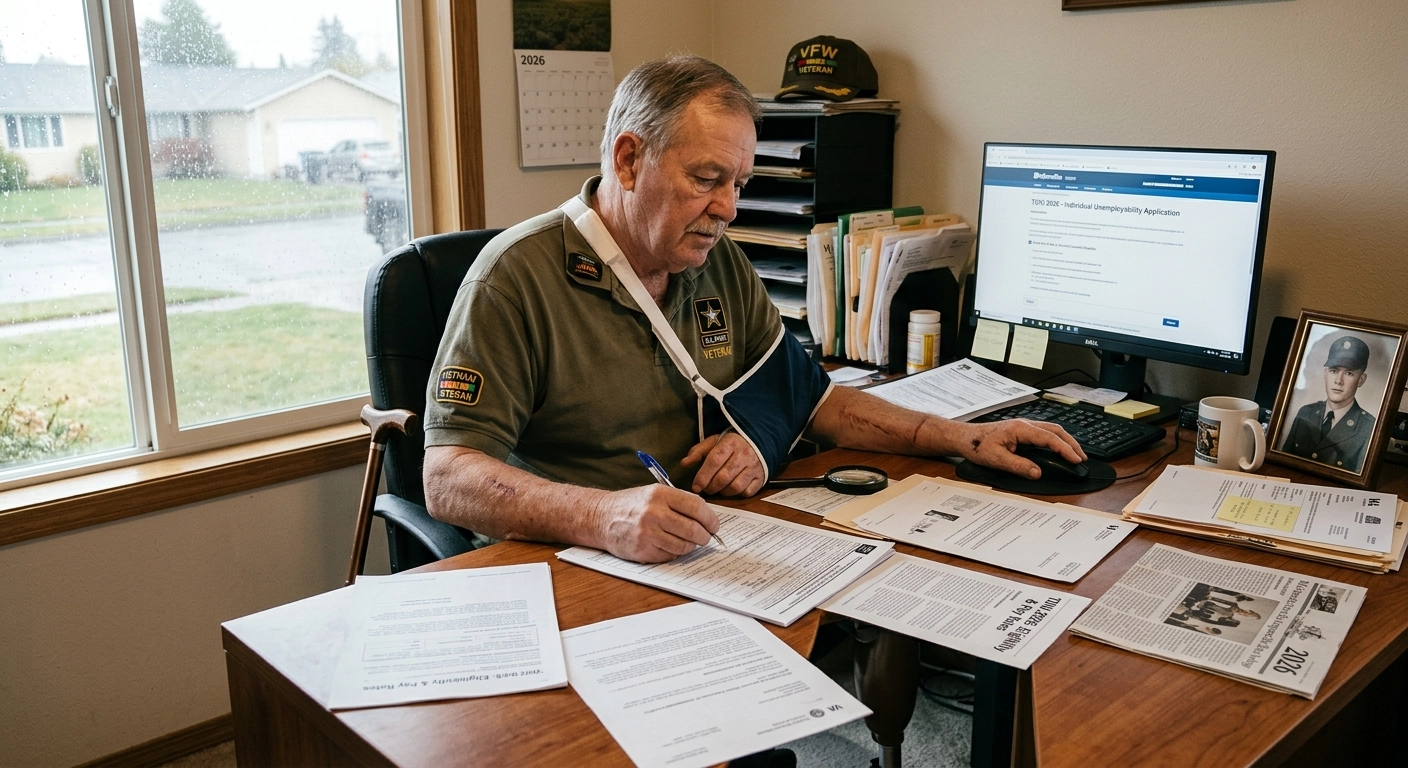
Strategy 6: Pursue TDIU If You Cannot Work
If your service-connected conditions prevent you from maintaining substantially gainful employment, TDIU pays at the 100% rate of $3,938.58 per month regardless of your combined schedular rating.
To qualify under 38 CFR 4.16(a), you need a single condition at 60% or higher, or a combined rating of 70% or higher with one condition at 40% or more.
TDIU is not an increase to your underlying rating. It is a separate determination that changes your pay status to the 100% level. For veterans at 70% or 80% who cannot work, TDIU represents the largest single available increase in monthly compensation.
File VA Form 21-8940. Document your employment history, your last date of work, and the functional limitations that make employment impossible. Get your treating physician to write a statement connecting your service-connected conditions to your inability to work.
Which Strategy Is Right for You?
The right strategy depends on where you are in the process.
New rating in the last year, criteria misapplied: Higher-level review. New evidence available: Supplemental claim. Secondary conditions never filed: Secondary service connection claims. Bilateral extremity conditions: Verify bilateral factor was applied. Unable to work: TDIU. Chronic condition with flare-ups not captured: Supplemental claim with physician statement.
Most veterans with established ratings benefit from more than one of these strategies simultaneously. A VA-accredited attorney can review your full rating picture and identify which approaches are best supported by your existing record.
Get a free rating review from a VA-accredited attorney.
No upfront cost. No fee unless you win.
Frequently Asked Questions
How do I know if my VA disability rating is too low?
The clearest way to verify your VA disability rating is to compare the criteria in your diagnostic code against your actual function. The rating criteria for every condition are published in 38 CFR Part 4 and are publicly available at eCFR.gov. For musculoskeletal conditions, compare the range of motion thresholds in the diagnostic code to the measurements in your C&P exam report. If your measurement falls at or below the threshold for a higher rating, your rating may be incorrect. For mental health conditions, compare the occupational and social impairment description at each level to your daily function. If the description for 70% matches your life better than the description for 50%, your rating may be too low. A VA-accredited attorney can review your rating decision and C&P exam report to identify specific errors.
What is a supplemental claim and how is it different from an appeal?
A supplemental claim allows a veteran to submit new and relevant evidence on a previously decided claim. The VA reviews the claim fresh, considering both the existing record and the new evidence. A supplemental claim can be filed at any time, even years after the original decision, and does not have a strict deadline. An appeal, by contrast, challenges the correctness of the original decision based on legal error or factual error in the existing record without requiring new evidence. Under the Appeals Modernization Act, veterans can choose between a supplemental claim, a higher-level review, or a Board of Veterans Appeals appeal. These lanes serve different purposes. If you have new evidence, file a supplemental claim. If you believe the rater applied the law incorrectly, request a higher-level review. If you want a Veterans Law Judge to review the case, appeal to the Board.
How long does it take to get a rating increase?
The processing time for a rating increase depends on the path chosen. Supplemental claims take approximately 61 days on average from receipt to decision, based on current VBA data. Higher-level reviews typically take a similar amount of time. Board of Veterans Appeals cases take significantly longer, often one to two years or more depending on whether a hearing is requested and the Board's current docket. TDIU claims filed alongside a rating increase claim are processed together and follow the supplemental claim timeline in most cases. Veterans pursuing rating increases should file all available evidence upfront and consider using the Fully Developed Claim process to minimize processing delays.
Can a VA rating be reduced if I file for an increase?
Filing a claim for a rating increase does not automatically trigger a review of existing ratings or create risk of reduction. The VA can reduce a rating only after a full re-examination showing material improvement under ordinary conditions of life and is subject to regulatory protections. A rating held for five or more years requires evidence of sustained improvement across multiple examinations before a reduction is permitted. A rating held for 20 or more years is protected from reduction below that level absent a finding of fraud. Veterans who are concerned about the stability of an existing rating should consult a VA-accredited attorney before filing, particularly if a re-examination has been scheduled or if treatment records show improvement in a rated condition.
What is a nexus letter and why does it matter?
A nexus letter is a written medical opinion from a licensed physician, psychologist, or other qualified healthcare provider that establishes a connection between a veteran's current condition and their military service or an existing service-connected condition. The nexus letter typically states the physician's opinion using the VA's required language: at least as likely as not that the condition is related to military service or to the existing service-connected condition. This standard, meaning 50% or greater probability, is the threshold for service connection under 38 CFR 3.102. A well-written nexus letter from a treating physician who knows the veteran's history is one of the most powerful pieces of evidence in a VA claim. Private nexus letters from physicians chosen by the veteran often provide more specific and more favorable opinions than the C&P examiner's report because the physician has an established treatment relationship and access to the full clinical picture.
What is a buddy statement and does it help?
A buddy statement is a written declaration from a person who has direct knowledge of a veteran's in-service event or the current functional impact of the veteran's disability. Buddy statements are submitted on VA Form 21-10210. They can be written by fellow service members, family members, coworkers, supervisors, or anyone else with relevant firsthand knowledge. The VA is required to consider buddy statements as evidence. Effective buddy statements are specific rather than general. A statement that says the veteran is in pain is less valuable than a statement that says the veteran was unable to attend his daughter's school event due to back pain, has missed seven workdays in the past three months, and requires assistance with household tasks the writer has personally observed. Specificity, dates, and concrete observations make buddy statements most effective.